Tuesday, 7 February 2012

Blurbs, Pictures, Performances

Artistic Director Lisa Parry writes:

The running order has been decided! Our dramaturg Louise Stephens Alexander has juggled actors, rehearsal locations and themes to fix our schedule.

So if you're at Chapter on February 17, Theatre503 on February 19 or The Arches on February 22, you'll see work by the following writers: Sam Burns, Vittoria Cafolla, Poppy Corbett, Clare Duffy, Samantha Ellis, Marged Parry.

And if you're at Chapter on February 18, Theatre503 on February 20 or The Arches on February 23, you'll see work by these writers: Ioanna Anderson, Branwen Davies, Sarah Grochala, Lisa Parry, Morna Pearson, Lindsay Rodden.

Obviously, we hope you come to both!

We've been running a campaign on twitter using the #a160feb hashtag where the writers have been revealing a word they think encapsulates their play. We also asked the writers to give us a sneak-peek into their plays. Below is what they came up with.

And don't forget to book! All booking links are on our website: www.agent160theatre.co.uk.

Poppy Corbett


Ioanna Anderson – How To Be A Pantomine Horse
In an air accident, the normal rules of human behaviour are suspended; people behave in unexpected and sometimes unpredictable ways. In this darkly funny, surreal and moving two-hander, an air crash throws two women into an impromptu but vital partnership.

Sam Burns - Amnesty
‘You cross with me?’ she says. ‘Sort of’, I says. ‘Cause I done a good deed with my knife.’ Grace, 16, hoarder of Lego, knows she has to surrender her number one favourite possession in the whole entire world, but fate’s not making it easy. And Grace can’t give anything away.

Sarah Grochala

Vittoria Cafolla – The Last Word
Paedar and Phoebe are in Pompeii, but are the city's ruins the only ones they're exploring? And just how important is it to have the final say in an argument? All is not as it seems when both compete to have the last word.

Poppy Corbett - Branded
Meet Kaitlin, the Store Image Director. She strictly enforces the brand of the store, but is there more to being a woman than a brand? Branded explores power games in the work place and in the world.

Branwen Davies - Genki
A woman finds herself in limbo in no man's land surrounded by battered boxes and a suitcase full of photos, memories and stuff that no longer make sense. They don't belong here but where does she belong?

Clare Duffy – How Do You Sleep At Night?
For three years, Abi has been protesting outside the home of a retired chief executive of a zombie bank. But today, at 4am, the executive’s insomniac wife comes to make Abi an offer.

Morna Pearson


Samantha Ellis - Noura
Can ice cream be chewy? Can bellydancers turn into birds? Can you be homesick for a place you haven't been to? And if you can, what's the cure? A shapeshifting dancer meets a mixed-up Iraqi refugee in this play about who we are and who we want to be.

Sarah Grochala - Red Shoes
And it don’t matter that I ain’t had no tummy tuck caesarean, no postnatal Pilates. Cos I’m thinking it don’t matter what you got, you got it, when you got shoes like that.
Kaz has found the answer to all her problems, a pair of shoes, a pair of red Christian Louboutin shoes. If she has those shoes, she knows she can win her ex, Darren, back. All she needs now is the money to buy them or the guts to steal them.
One night in London when everything goes crazy, she finally gets her chance.

Lisa Parry - Nancy
Nancy lives in Sussex – the rural bit, not Brighton – and is in financial straits. But it’s not just the bank she needs to keep from her door; it’s the rabbits and moles too. But what has this to do with the audience? And why is she on the Agent 160 tour?

Clare Duffy

Marged Parry – The Sweet Shop Stand Off
Melisa's back in her home town and she's not who she used to be. She seeks to salvage a time capsule that she buried long ago with her childhood best friend Kevin. But why is Kevin so reluctant to dig up the past?

Morna Pearson – Skin; or How To Disappear
Robert hasn't left his house since Helen Daniels from Neighbours died. Having pulled out every hair on his body, he has started peeling off all of his skin. His day is interrupted by a visit from an incapacity benefit assessor. Somebody's life is about to change.

Lindsay Rodden – A Modest Proposal
Something is rotten in the world.  But the butchery is far beyond the border, and even if the cries and howls came over her own back fence, Mrs Paula O’Neill wouldn’t hear them. Hasn’t she trouble enough, with one runaway daughter, and a baby boy to grow up nice and fat? Eyes down, turn the radio up, and get that dinner on. And eat every pick on that plate. 

Sunday, 5 February 2012

Snow, Sherman, Show

Artistic Director Lisa Parry writes:
Like most of the UK (with the exception of our writer in Shetland it would appear!) I woke up this morning to several inches of snow. It looked fantastic. I decided to be sensible, not run, stay in the warm and I switched on my mac to check the news/facebook/twitter etc.

Lisa Parry

Ah. Samantha Ellis, one of our writers, was travelling north, from London to Scotland, by train for rehearsals. I'd spent yesterday on the road, driving back from Wales and had forgotten. Via twitter, I discovered she had chocolate for the journey - always a wise measure, with or without snow. I glanced outside the window again, checked the East Coast website and saw all services were running. For blog readers outside of the UK, this is rare: trains are regularly cancelled over here for the wrong type of snow or leaves on the line. We'd had a lucky escape.

I'm hoping our good luck continues this week, because this is the week when everything goes up a notch. You may have noticed an escalation of activity already on our twitter feed and facebook updates. Rehearsals have started in Scotland and are soon to start in London and Wales. Casting is almost complete and the directors and our techie are discussing the look of the show. Our producer is bogged down in spreadsheets, trying to make figures add up and devising codes and formulas, and our dramaturg is not only talking to the writers about last minute nips and tucks, she's also editing videos, posting photos on twitter (follow the #agent160feb hashtag if you don't already) and baking at unsocial hours for relaxation. One day she sent me an email at 4am and I replied at 6am. Agent 160 was down for approximately two hours.

Things are, without a doubt, crazy at the moment, but something happened this week which, combined with pots of tea, some yoga and a real belief in what we're doing, is helping me at least get through.

On Friday night, I went along to Sherman Cymru in Cardiff. The building has finally reopened following a massive refit and the theatre's having a series of open nights for people its worked with, donors, curious Cardiffians etc. The rehearsal rooms are so potential-giving, it's incredible and the theatre seats are really comfortable, even for people with (I tested them out) bad backs. Anyway, over drinks in the foyer where I caught up with Mared Swain, one of our directors and Branwen Davies, one of our writers, I talked shop. Then I caught up with some other people, but throughout the evening several people approached me. And they all wanted to talk about the same thing - Agent 160.

I was told people are looking forward to the shows at Chapter, students on creative writing courses can't stop talking about it, everyone thought it was a great idea, people are excited about the writers... I was absolutely bowled over by the enthusiasm and encouragement being sent in my direction, often from people I'd only just met. When preparing for a show like this, particularly this one where a lot of the communication is being done online, it's easy to sometimes wonder if you're reaching anyone at all. Of course, twitter and facebook help in that people sometimes do engage with you, but it's not the same as face-to-face contact. But from what I saw in Cardiff, there's clearly a strong appetite for our work and an enthusiasm and belief in what we're trying to achieve. People out there think we can make a real difference.

So that's spurring me on this week. And one more thing is too. I've been emailing some of our actors to sort out where to send contracts etc, and one emailed me back saying how excited he was to be working on the show. He didn't say he was excited because of the company ethos; he didn't even mention it. He said he was excited because of the cracking scripts.

And that's what we're about: the scripts. Our ethos stands because we believe women can, and do, write cracking scripts which belong on stages throughout this country.

And so on with the admin, the emailing, the marketing - and hopefully people will come to our shows and see that's true.

Monday, 30 January 2012

"All I ask, is the Priviledge for my Masculine Part the Poet in me..."

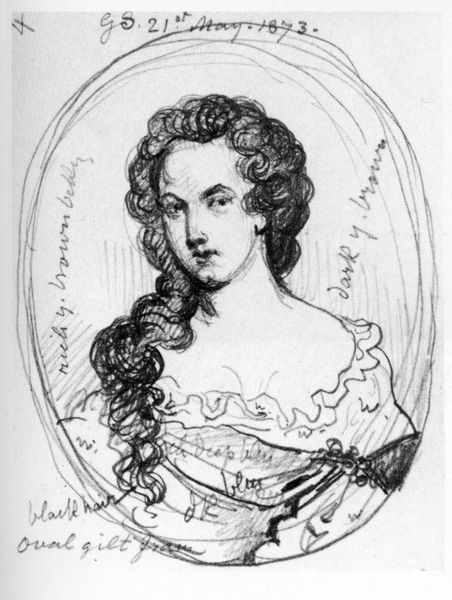
Hello everyone, I'm Samantha Ellis, and I'm very proud to be part of the first Agent 160 show. When I was trying to think of something to write for this blog, I thought I'd write about our inspiration Aphra Behn.

Virginia Woolf said “All women together ought to let flowers fall upon the tomb of Aphra Behn...for it was she who earned them the right to speak their minds”. And so I went to Westminster Abbey.

But the Abbey information lady had no idea who she was. “Could you spell that please?” she asked. And “Who was he?” But when we found her, she got excited: “She was a spy!” Agent 160 was her spy name, in fact. But she wasn't listed as a writer. Which was odd. And she's not in Poets' Corner (why not?) but in the Cloister. And the inscription on her grave—"Here lies a Proof that Wit can never be / Defence enough againft Mortality"—seems a bit harsh. But her works do live on.

We don’t know much about her. Maybe spying made her secretive; maybe she liked inhabiting other roles, speaking other voices. She called herself a "playwright of many voices" and was evidently an inventive self-fashioner—and a dedicated libertine. Woolf called “shady and amorous”. Born in Kent in 1640, possibly a barber’s daughter, possibly a Catholic, she married at 24, but two years later she was single and spying for Charles II in Europe and in Surinam, where she met the African slave who inspired her great anti-slavery novel Oroonoko. Charles II didn't pay his spies promptly, and after she found herself in jail for debt, she gave up espionage and took up her pen, first as a hack and then in the theatre. Her first play, The Forc’d Marriage, was produced in 1671, when she was 31. Ten years later Nell Gwyn starred in her hit, The Rover. She died in 1689.
In a preface she wrote to The Lucky Chance, she wrote:

Had the Plays I have writ come forth under any Man's Name, and never known to have been mine; I appeal to all unbyast Judges of Sense, if they had not said that Person had made as many good Comedies, as any one Man that has writ in our Age; but a Devil on't the Woman damns the poet.... All I ask, is the Priviledge for my Masculine Part the Poet in me to tread in those successful Paths my Predecessors have so long thriv’d in... If I must not, because of my Sex, have this Freedom...I lay down my Quill.”
That was in 1686. According to Sphinx Theatre Company, three hundred years later, only 17 per cent of plays produced in the UK are by women. Which is why Agent 160’s so necessary.

Saturday, 28 January 2012

Why Do We Need Agent 160?


Playwright Vittoria Cafolla writes:
Why do we need Agent 160? I'll tell you why.


A wee while ago I was at a networking event. I'm not very good at networking. The last one I was at, I think I convinced a major producer that the piece of work he'd just directed was a fluke. So I know that I don't always come across as very confident.

But this time, I was armed with my one remaining Agent 160 business card and, I convinced myself, that this wasn't just an opportunity for me, but for the company.

Who to choose?

A scan of the room and I knew I should probably approach a man from one of the best known theatres, the one with an illustrious history. There was a writer talking to him, so I waited behind him. I lent the writer a pen, and he wrote on the copy of the script he was giving the theatre producer. The writer did most of the talking.

Anyhow, a few minutes later, this producer turns to me. I introduce myself, the card concealed in my other hand.

He asks me what I do, and I tell him I write plays. And that I'm interested in sending one to him: and before I can explain that I'd also like to tell him about Agent 160, he tells me that they receive hundreds of plays a year; that if I'm serious about writing, I can't just send in the first draft. It has to be a fifth, sixth, seventh draft.

I wonder if he asked what draft number the man in front was handing him.

He continues and I bite my tongue. I am not an established writer, but I would NEVER ever send a first draft out. Even if asked for a first draft, the work I hand over has been rewritten, read by someone else. Anyhow, he's trying to be helpful, so he tells me to invite some actors round and have them read the play, so I can hear how it sounds. Good advice, but....

Eventually, I tell him thank you, he tells me his email is on the website. What, the email that you just bothered to give to the man before me in the queue?

And then I tell him about Agent 160.

I suddenly feel bad. I think he's uncomfortable, but I don't know why.

I explain that we hopefully will be showing some of the plays in Belfast, and if we get the funding, we are trying to organise a panel discussing women writers in Irish theatre. Would he be interested in taking part?

I swear he's scared. Now I feel really bad, that I'm ambushing him, and that somehow - in the course of five minutes, I've been deceitful.

Is it that he's just given me a spiel, and I now have revealed myself to be more accomplished than he assumed?

He hurries to tells me about all the female playwrights that the theatre has produced recently. It's not his thing (!), this panel, but it's a cause very close to the AD's heart. She might be interested in the panel. He takes the business card, shoves it in his top pocket and can't seem to end the conversation fast enough.

I still feel odd about the exchange, and puzzled by his response to the very simple question about women writers in theatre. It felt like I'd thrown a political gauntlet at him. Why on earth should it be a contentious question?

Anyway, I go home, play with the baby, and feel a headache coming on. I go to bed, in bad twist. At 2am, I wake up, raging.

Why would his whole attitude change from professional towards the person in front of me to what seemed like patronage in my case? Admittedly, had I never submitted anything, anywhere, all his advice would have been incredibly useful.  He didn't intend to be patronising. He seemed like an amiable sort. Was it because I was wasn't confident enough? He didn't really give me a chance to explain what I'd done as a playwright before telling me how I should go about submitting a play. Was it because I'm a woman? I don't know. And to get into a whole other can of worms, was it because people (particularly men) think that when I say I've had a play on, I must be an actress?

Stop pigeonholing us. Stop assuming that I would even consider not taking playwriting seriously. Do you ask this of the others who approach you?

I worked out why I thought he felt ambushed. Because by the end of the conversation, he realised he'd read me all wrong. He'd fallen into the trap we are trying to address.

This is why I'm glad to be a part of Agent 160. This is why Agent 160 exists.

Friday, 27 January 2012

Branwen Davies' Radio Interview

Playwright Branwen Davies' radio interview on Stiwdio, Radio Cymru, is now available on BBC iplayer (15 minutes, 13 seconds in):

Tuesday, 24 January 2012

Playwright Branwen Davies:
I brofi nad yda ni'n cael ein llethu gan iaith o fewn y cwmni ac bod ganddo ni'r rhwydd hynt i ysgrifennu yn y Gymraeg dyma flog cyntaf Cymraeg y cwmni yr holl ffordd o Aberystwyth!


Rydw i newydd recordio pwt o gyfweliad radio ar gyfer rhaglen BBC Cymru Stiwdio yn son dipyn am gefndir y cwmni a pha mor bwysig ydy hi i greu gwaith a chynhyrchu gwaith.Mae dramau angen cael eu perfformio a'u rhannu nid sefyll yn segur yn hel llwch. Mi fydd yn cael ei ddarlledu nos Iau, Ionawr 26ain rhwng 6.03pm a 6.30pm a bydd modd ailwrando ar y BBC i-player.

Ar ol clywed y stategaeth mai ond 17% o ddramau gan ferched oedd wedi cael eu cynhyrchu ym Mhrydain yn 2010 mi wnes i ddechrau meddwl am y sefyllfa yn y Gymraeg yng Nghymru. Pan mae rhywun yn mynd i enwi dramodwyr mae enwau megis Meic Povey, Aled Jones Williams a Dafydd James yn eithaf amlwg. Rydw i'n hoff o'u gwaith ond hefyd yn hoff o amrywiaeth. Pwy ydy'r merched sydd yn ysgrifennu? Mae nhw'n bodoli ond efallai ddim mor amlwg. Pam? Mae angen clywed a gweld mwy o'u gwaith ac yn gyson.

Rydw i'n edrych ymlaen i weld drama ddiweddaraf Theatr Genedlaethol Cymru ar y cyd a Sherman Cymru a Galeri sef 'Sgint' gan Bethan Marlow. Mae Bethan yn ddramodwraig sydd yn ysgrifennu yn ffraeth a gafaelgar gyda chalon, emosiwn a hiwmor. Mae hi'n gyfnod cyffroes yn fy marn i ym myd drama yng Nghymru hefo Cyfarwyddwr Artistig newydd yn Theatr Genedlaethol Cymru a Chyfarwyddwr Cyswllt newydd yn Sherman Cymru. Mae'n gyfnod newydd ac yn gyfle i greu gwaith amrywiol a heriol a'i rannu a chynulleidfa amgenach na chynulleidfaeodd Cymru yn unig. Mae Agent 160 yn galluogi dramodwyr Cymru i rannu eu gwaith hefo cynulleidfaeodd yn Lloegr ac yr Alban ac mae hyn yn gam positif yn fy marn i er mwyn creu argraff a chodi proffil theatr a dramodwyr Cymru.

Rydw i'n mwynhau ysgrifennu yn y Gymraeg a'r Saesneg ac yn falch o'r rhyddid o symud o un iaith i'r llall. Roedd gen i ddiddordeb arbrofi gyda ysgrifennu drama ddwy ieuthog gan fy mod i'n ymwybodol fod fy steil o ysgrifennu yn amrywio cymaint yn dibynnu ar pa iaith rydw i'n ei ddefnyddio. Mae fy nramau Saesneg yn tueddu i fod yn afreal, symbolaidd a thywyll a fy nramau Cymraeg llawer mwy blodeuog eu hiaith a'u harddull. Mae fy nrama 'Genki' a fydd yn cael ei berfformio yn 'Agent 160 presents Agent 160' yn ddrama dair ieuthog! Rydw i wedi cyfuno Cymraeg, Saesneg a tipyn o Siapanaeg ynddi. Drama ydy hi wedi ei hysbrydoli o ddychwelyd i Gymru ar ol cyfnod yn byw yn Siapan a ceisio dod o hyd i fy nhraed unwaith yn rhagor ar ol antur a byw bywyd mewn rhyw fath o freuddwyd neu ffantasi lle roedd rhywbeth yn rhyfeddu a synnu rhywun yn ddyddiol.

Monday, 23 January 2012

Q and A with Agent 160 Writer Sam Burns


As Agent 160 Presents Agent 160 draws ever closer, we'll be posting interviews with some of our writers. First up - Sam Burns...


I'm Sam Burns and my piece Amnesty is appearing in Agent 160 Presents Agent 160.


What have you seen recently that's inspired you?

I’m rather rural at the moment, so I read more plays than I see, but I did catch a rather splendid am-dram production of Top Girls towards the end of last year. That’s a play that took me several attempts to read, ‘cause the overlapping dialogue gave me brain-freeze – works a lot better on the stage.


What is your play about?

It’s a monologue: it’s about a girl who’s planning to give up her knife in an amnesty.


Whose work inspires you?

My favourite playwright’s Arthur Miller, probably. Or some Restoration bod. But I’m currently reading my way through various names I’ve never had the chance to see: Jez Butterworth, Lucy Prebble, Mike Bartlett. It’s all very instructive. (I don’t mean to make them sound like theoretical physicists.) I find other media triggers my writing more than the stage though, oddly – a poetry reading by Paul Henry or Catherine Fisher always has me wishing I’d brought a pen and paper. (I don’t mean to make me sound like a plagiarist.)


What are you most looking forward to as part of the process?

It’s all so new to me (this’ll be my second production, after my piece in Sixty-Six Books) that I have really no idea! It’s all an adventure.


How have you found the writing process so far?

Been a while since I tackled a monologue and I did rather enjoy it. It started life as a duologue, which really didn’t work: there was a very clear protagonist and then a character who seemed to be hanging around awkwardly on the fringes, like me at a party. So I excised the second character and things fell together a little more. I hope.


What excites you about Agent 160?

It puts the writer at the forefront of the process, and I don’t think there’s anything very like it knocking about the place at the moment. And I’m excited about anything that endeavours to rectify that ghastly 17 per cent statistic (just 17 per cent of produced work in the UK is written by women).


What do you want an audience to take away having seen your play?

I’m very Barthesian about this – basically I think it’s entirely up to them. I hope I’m not didactic: about the last thing I’d want anyone to come away feeling is ‘Well, that’s taught me a lesson’.


What else are you currently working on?

I’m back to writing plays on spec at the moment - one never-ending redraft, a new full-length play and the odd short piece here and there. Also tentatively looking into finding a new job – preferably one that’ll leave me some time to write, and that doesn’t involve telephones.